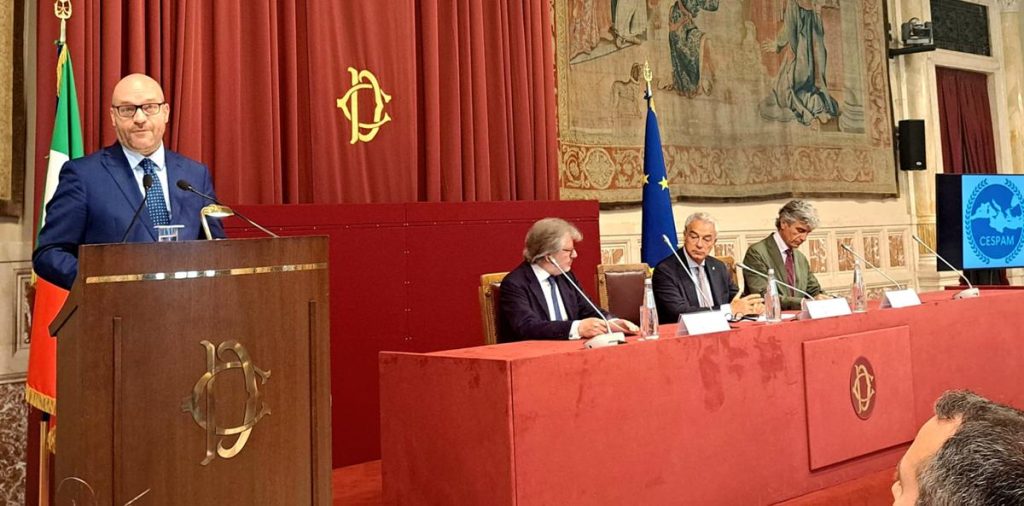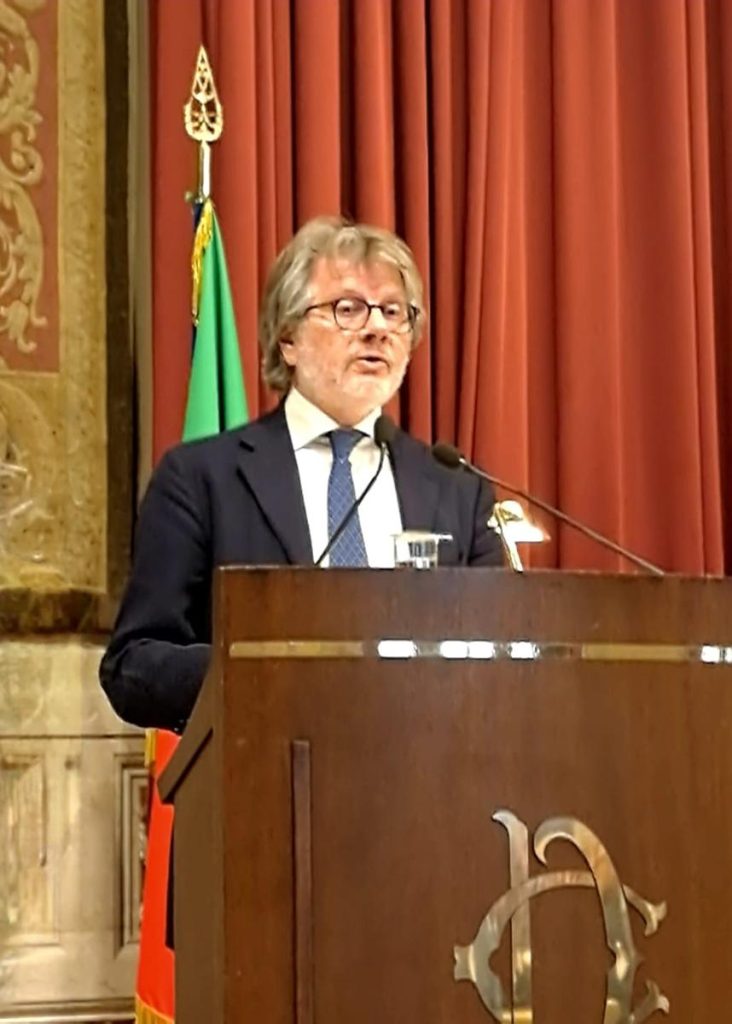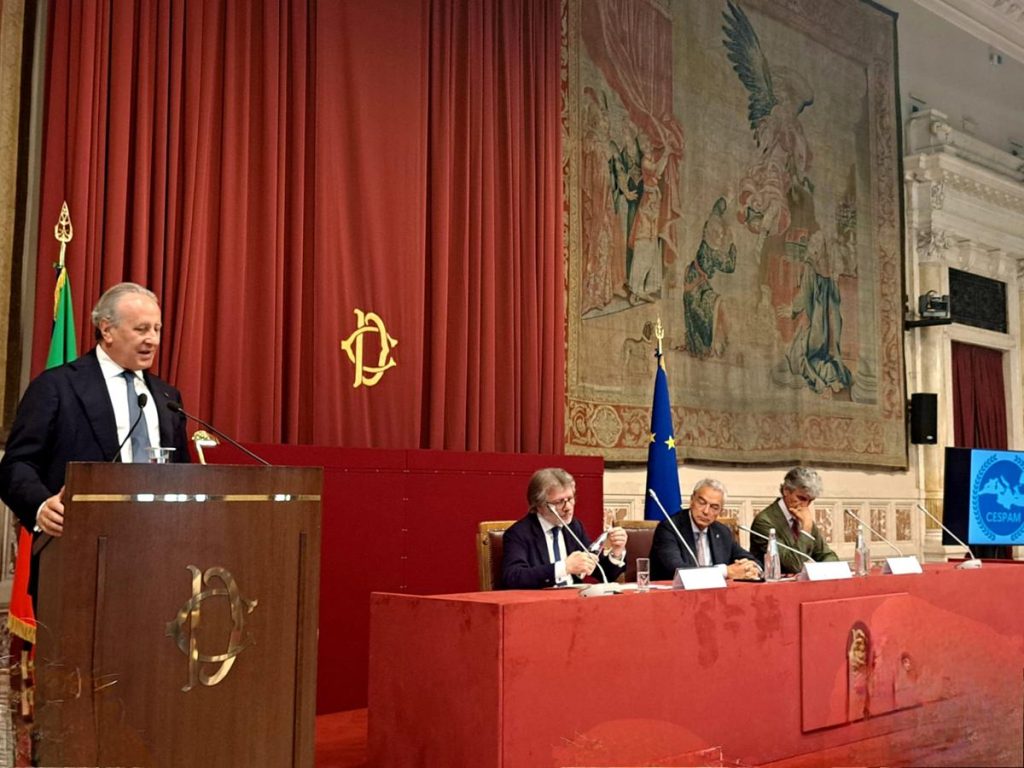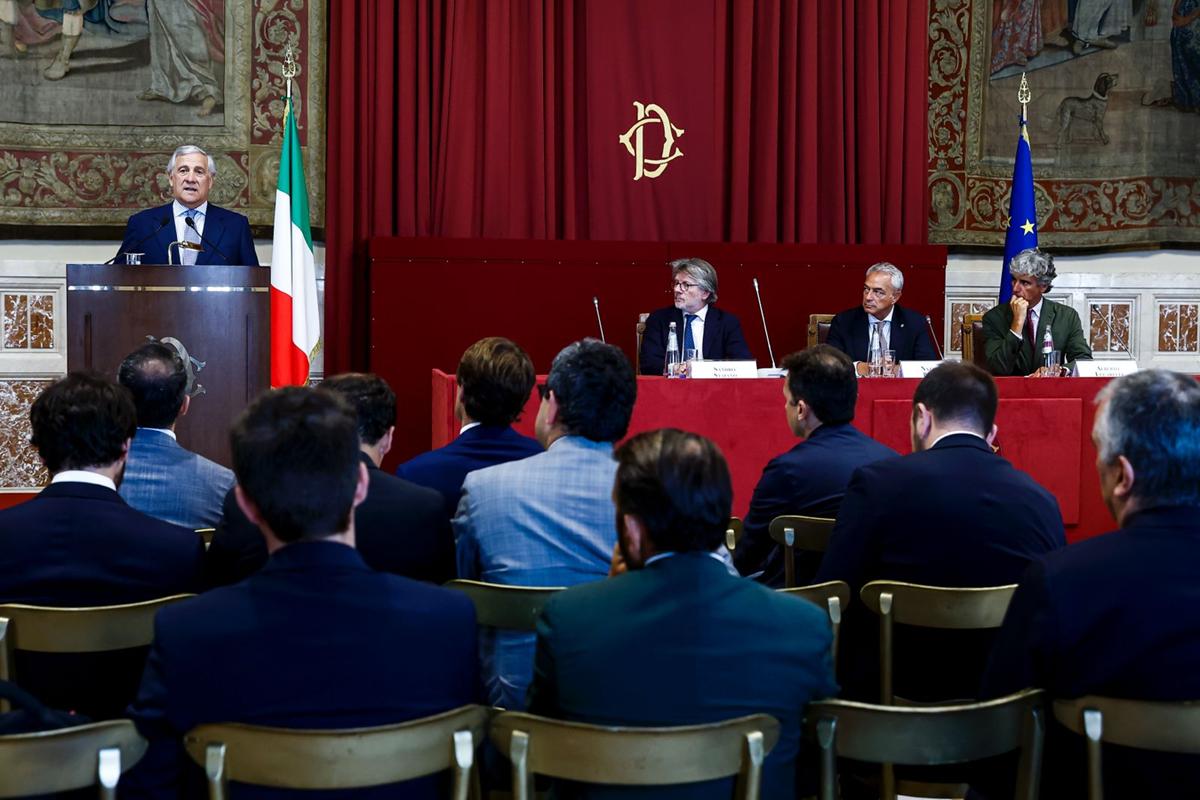
On July 8, 2025, Palazzo Montecitorio – the institutional heart of Italian democracy – hosted the international conference Democracy and Parliamentarism in the Mediterranean Area, organized by the Mediterranean Parliamentary Studies Center – CESPAM of the University of Naples Federico II, in collaboration with the Chair of the Constitutional Affairs Committee of the Chamber of Deputies. The initiative was held to mark the International Day of the Mediterranean, and aimed at launching a shared, visionary process: the drafting of an ideal Mediterranean Constitution, grounded in universal human rights, pluralist democracy and solidarity.
Lorenzo Fontana, President of the Chamber of Deputies, opened the proceedings by emphasizing the vital role of parliamentary diplomacy. “In a region as complex as the Mediterranean,” he said, “we must strengthen dialogue between parliaments to prevent conflicts and foster peace.”
Antonio Tajani, Minister of Foreign Affairs, concluded the event by underlining the strategic importance of the Mediterranean for Italy’s foreign, economic and trade policies. “This sea must not become a graveyard for migrants,” he stated. “It must return to being a corridor of peace, trade and cultural exchange. Democracy is the key to this rebirth.”
Other speakers included Matteo Lorito, Rector of Federico II University, Nazario Pagano, President of the Constitutional Affairs Committee of the Chamber, Sandro Staiano, constitutional law professor and CESPAM founder, and Alberto Lucarelli and Davide Ambroselli, respectively President and Director of CESPAM. High-level diplomatic and institutional participation included Daniel Azzopardi (Ambassador of Malta), Eleni Sourani (Ambassador of Greece), Mohamed Khelifi (Ambassador of Algeria), Mickael Bounakhla (Counsellor, French Embassy), and Giulio Centemero, President of the Parliamentary Assembly of the Mediterranean (PAM), a body recognized by the United Nations. Many members of Parliament, officials, and civil society representatives also attended.
CESPAM presented its vision of creating a permanent multilateral platform bringing together parliaments, universities, civil societies and international organizations from the Mediterranean. The aim is to develop a shared constitutional charter, capable of addressing the region’s environmental, migratory, political and social crises.
Sandro Staiano described the strong cooperation already established with PAM, and declared that “the goal of laying the foundation for a Mediterranean constitutional process has already been achieved.”
Alberto Lucarelli called for a bottom-up drafting process, involving people, institutions and academia, while Davide Ambroselli highlighted the potential of the Mediterranean to become “a laboratory of constitutionalism, shaped by its cultural richness and the energy of its youth.”
For Rector Matteo Lorito, the Italian university system has a key role to play in training future “Mediterranean citizens”, promoting international cooperation, even in times of conflict. “More democracy,” he noted, “means more academic agreements, more cultural bridges, more peace.”
The Mediterranean, for millennia a crossroads of civilizations, once again emerges as a geopolitical and symbolic space for dialogue, cooperation and a renewed legal-cultural identity. A shared Mediterranean Constitution, rooted in history yet open to the future, could be the first step in turning common heritage into common destiny.
www.cespam.unina.it
www.camera.it
www.esteri.it
www.unina.it
#MediterraneanConstitution #CESPAM #Mediterranean2025 #Democracy #FedericoIIUniversity #Montecitorio #HumanRights #ParliamentaryDiplomacy #Tajani #Fontana #Lorito
Instagram
@unina_federicoii @camera_dei_deputati @maeci_esteri @cespam_federicoii
Facebook
@unina @camera.it @MinisteroAffariEsteriCooperazioneInternazionale @CESPAMFedericoII
LinkedIn
@University of Naples Federico II @Italian Chamber of Deputies @Ministry of Foreign Affairs and International Cooperation @CESPAM – Mediterranean Parliamentary Studies Center
(Photos provided by the Press Office of the University of Naples Federico II)